01 Situation
In the Kuria community of Kenya, Female Genital Mutilation (FGM) prevalence stands at 84%—one of the highest nationally. Patriarchal cultural norms grant men significant authority over community decisions, reinforcing harmful practices, early marriage and gender-based violence. Social expectations, male-dominated power structures and limited accountability mechanisms normalize violence and suppress women’s and girls’ rights. Despite ongoing awareness efforts, deeply rooted beliefs and low male participation prevent meaningful progress.
02 Assignment
The challenge: How might we effectively involve adolescent boys, young men and senior men as catalysts for change to reduce retrogressive norms that promote SGBV against women and girls in Kuria? Consultants were tasked with training staff and youth in Human-Centered Design, facilitating co-creation with community stakeholders and developing a Trainer’s Guide, toolkit, sustainability plan and comprehensive pilot proposal.
03 Approach
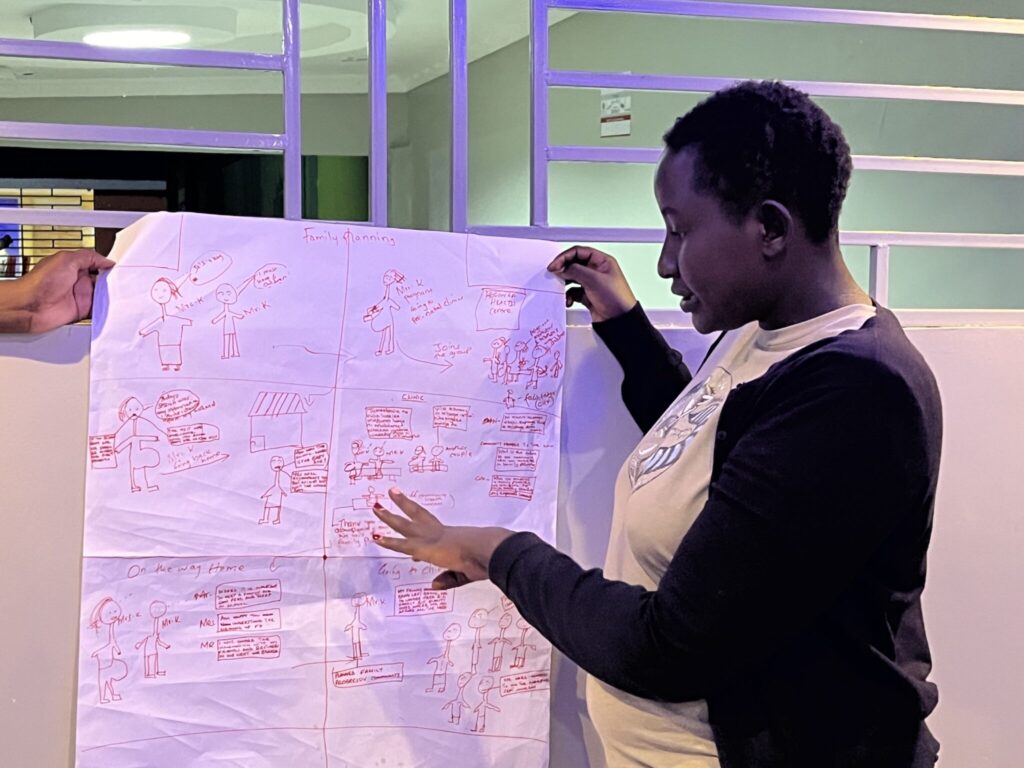
HCD sensitization equipped participants with design mindsets and tools. Discovery research across Migori, Siaya, Homa Bay and Kisumu engaged diverse user groups to understand cultural drivers of FGM and GBV. Three weeks of fieldwork in Migori informed personas, journey maps and ecosystem diagrams. A four-day design sprint generated and refined prototypes, which were tested and improved with direct community feedback. The pilot proposal wove insights, prototypes and a sustainability strategy into a compelling case that secured additional funding.
04 Result
The project delivered tested prototypes, detailed personas, a full pilot strategy and an M&E and risk-management framework. Early outcomes include strengthened youth leadership, positive behaviour shifts toward gender equality, increased male allyship and growing community-led resistance to harmful practices. Recognition as a top innovation secured funding for pilot rollout, enabling Kuria stakeholders to drive long-term, culturally rooted change.