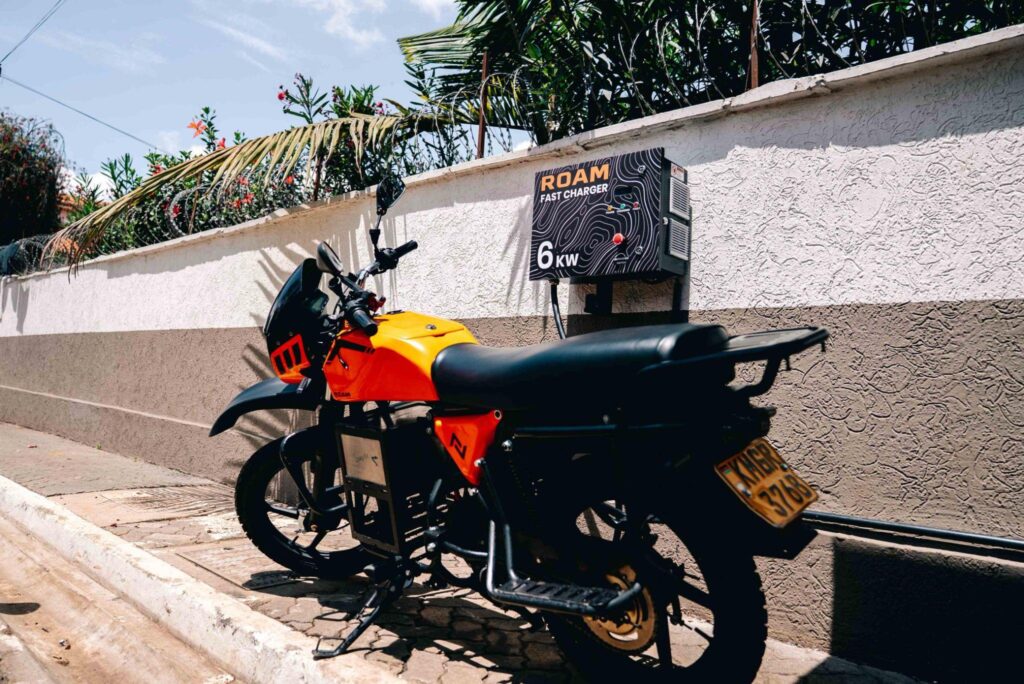
01 Situation
Electric motorcycle adoption in Kenya is accelerating, yet constrained by unreliable charging experiences, fragmented infrastructure, and financial uncertainty. Research shows riders prioritise income protection over cost savings, with downtime, inconsistent battery quality, and lack of trust limiting adoption.
02 Assignment
Translate field insights into a scalable Charging-as-a-Service (CaaS) model that aligns with rider income logic, builds trust in battery ownership, and enables MSMEs to participate in a viable, inclusive charging ecosystem.
03 Approach
Field research was conducted with riders, MSMEs, and ecosystem actors across urban, peri-urban, and rural Kenya, combining interviews, journey mapping, and real-world testing. Insights identified distinct rider personas and revealed that adoption depends on predictable service, routine-fit locations, and minimal downtime. Fast charging was positioned as a complement to swapping, with prototypes focused on flexible payment structures, transparent battery health assurance, and placement
in high-flow locations such as petrol stations, markets, and transport hubs. Targeted experiments tested trust mechanisms, service reliability, and MSME hosting models, while stakeholder workshops and a public webinar aligned operators, policymakers, and financiers around shared standards and scaling pathways.
04 Result
Evidence reframed fast charging as an income-protection tool rather than a speed solution. Scalable pathways emerged: trusted battery systems, flexible ownership models, and MSME-enabled infrastructure. The l webinar convened ecosystem actors to validate insights and catalyse collaboration for regional scale. Audience expressed the desire to continue collaboration, for which an EV ecosystem space has been launched on the Innovators Team platform.