Situation
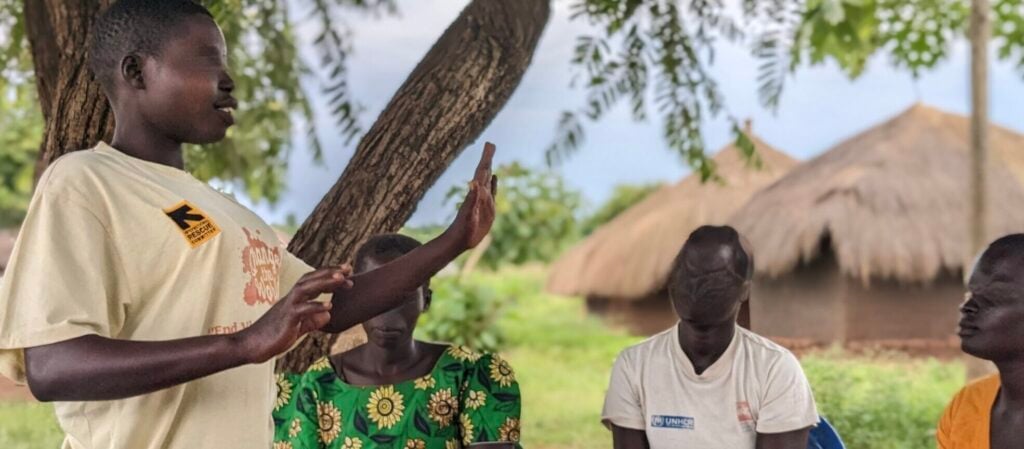
Women and girls increasingly rely on self-care to manage their sexual and reproductive health, particularly where health systems are fragile. In humanitarian settings such as Bidi Bidi and Palabek refugee settlements, risks of violence, exploitation, and early marriage heighten the need for accessible SRH options. While global evidence affirms the promise of self-injected contraceptives, over-the-counter pills, and self-managed abortion, integrated SRH self-care packages remain largely absent in refugee contexts.
Assignment
The International Rescue Committee’s Airbel Impact Lab sought to understand how adolescent girls and young women in these settlements experience SRH products and self-care practices, identify opportunities to expand contraceptive coverage, and design interventions suited for humanitarian realities. Proportion Global was engaged to lead the first phase of this HCD process.
Approach
Over 2.5 months, Proportion Global applied behavioural research methods using creative, trauma-sensitive tools—role-play, card sorting, collaging, visual scales—to explore perceptions and experiences with SRH self-care. Tools were co-tested with WORUDET and ACORD, refined through field pre-tests, and deployed in both settlements. Insights were synthesised into personas, journey maps, systems maps, and opportunity areas, informing the project’s design phase.
Result
The research generated clear evidence on user behaviours, strengthened partner capacity in UCD, produced actionable design outputs, and set the foundation for Airbel’s integrated SRH self-care interventions in subsequent phases..