Situation
In peri-urban Thatta, Sindh, maternal and newborn health outcomes are constrained by long travel distances, limited-quality facilities, and deeply rooted cultural barriers. Delivery complications frequently arise when women must navigate costly transport, rely on unskilled home care, or avoid health centers due to longstanding distrust shaped by negative experiences.
Assignment
Proportion Global was engaged to transform rich formative research into community-owned concepts that could strengthen access, quality, and cultural relevance of maternal care—particularly around emergency response, skilled delivery, and collaborative decision-making within households.
Approach
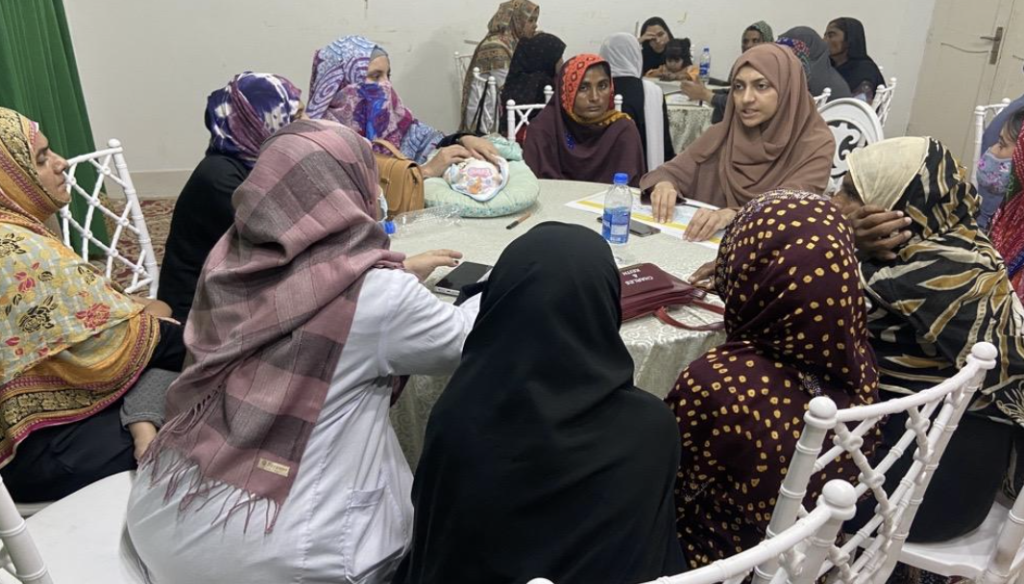
A two-day human-centered design workshop brought together women, husbands, and mothers-in-law in an inclusive co-creation space. Through facilitated exercises, participants surfaced core pain points, reframed them into design opportunities, and generated solution pathways. Ideas grounded in lived realities were prioritized and consolidated into four scalable concepts: Community Health Coaches, Social Support Activists, Maternity Houses, and Respectful Quality Care.
Result
Community-shaped prototypes emerged, spanning transport pooling models, localized maternity hubs, peer-led counselling, and culturally attuned awareness initiatives. These concepts created a foundation for sustainable, trust-building improvements embedded within the community’s own systems and social dynamics.