01 Situation
Self-care is central to women’s and girls’ health, with new technologies enabling independent management of menstruation, fertility, pregnancy, and childbirth. In fragile health systems, especially humanitarian settings, SRH self-care fills critical gaps. Female refugees face high risks of violence, exploitation, and early marriage. Recent studies and global guidelines highlight the promise of interventions such as self-injected contraceptives, over-the-counter pills, emergency contraception, and self-managed abortion.
02 Assignment
Despite growing recognition, integrated SRH self-care interventions remain rare in humanitarian contexts. IRC’s Airbel Impact Lab identified the need to package and deliver self-care commodities in refugee settlements. IRC commissioned an HCD study in Bidi Bidi and Palabek to understand experiences with self-care, identify opportunities to increase contraceptive coverage, and design suitable interventions.
03 Approach
Proportion Global led the 2.5-month design research phase. Using user-centred and behavioural methods, we explored how adolescent girls and young women access and experience self-care contraceptives and abortion services.
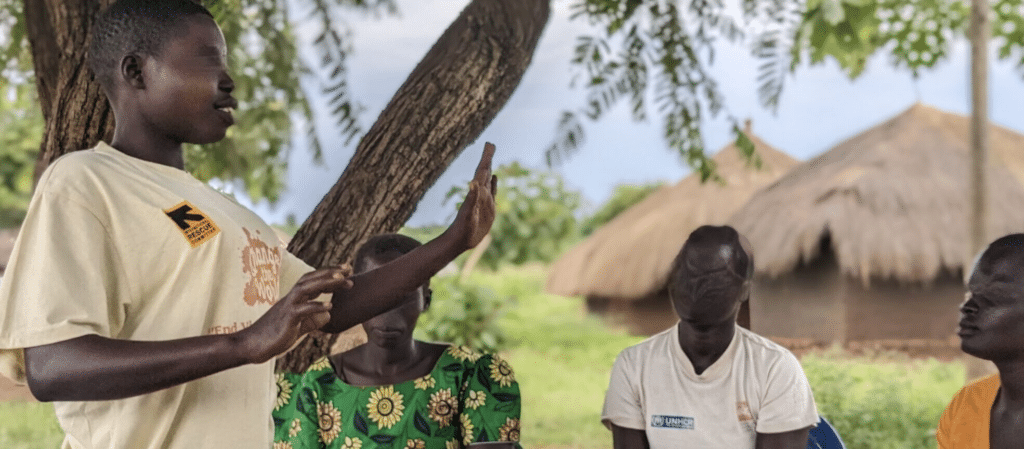
We created interactive tools—role play, card sorting, picture collaging, and visual scales—to engage participants
Tools were pre-tested with partners before fieldwork.
Research was conducted jointly with local teams in both settlements
We supported prioritisation of design challenges and co-designed early interventions with the project team.
04 Result
The process built partner capacity in HCD and produced clear insights to guide intervention design.