01 Situation
In South Sudan, women and girls face extreme levels of violence and disproportionately limited access to sexual and reproductive health services. With 65% of women reporting lifetime physical and/or sexual violence and teenage pregnancy at 30%, the fragmentation of GBV and SRH services remains a major ba
02 Assignment
International Rescue Committee engaged Proportion Global to apply user-centred design and storytelling to define the characteristics of an integrated GBV/SRH service model. The work required gathering lived experiences from diverse women and girls, assessing provider readiness, and articulating concrete design requirements such as preferred provider type, gender, service location and timings.
03 Approach
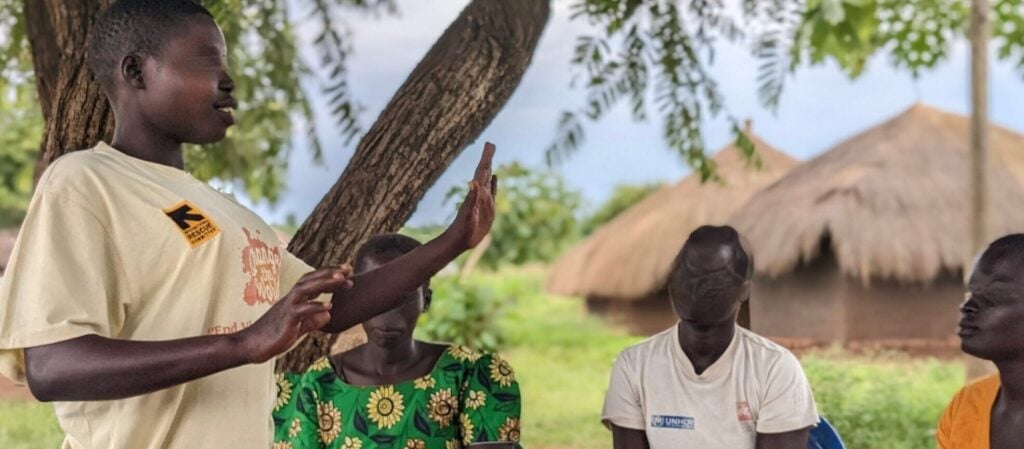
The team used narrative-based research tools to safely explore sensitive experiences. Fictional stories, card-sorting, character and emotion cards helped surface client needs and access barriers. Role-play exercises enabled women to sketch and discuss their ideal service points. Storyboards visualised user experiences across health facilities, mobile clinics and women’s safe spaces. Insights were synthesised into journey maps, followed by collaborative ideation where schematic visuals of integrated service models were co-created with the IRC team to identify opportunities and constraints.
04 Result
The process generated a deep understanding of survivor needs and provider perspectives, validated barriers to GBV/SRH access, and clearly defined desired service characteristics. Storyboards, prototypes and schematic visuals now guide the IRC in designing integrated, survivor-centred services that are contextually appropriate, accessible and aligned with women’s preferences in South Sudan.