Situation
In Ethiopia, gender-based violence affects up to 71% of women and girls, with high school students facing a 50% lifetime prevalence. In-school GBV is often normalized or ignored due to limited institutional awareness, a lack of relevant teaching tools, harmful social norms and minimal student capacity to recognize or report abuse. Existing gender clubs rarely deliver age-appropriate, engaging or inclusive GBV education—especially for boys—leaving adolescents without the knowledge needed to protect themselves and their peers.
Assignment
The challenge was framed as: How might we address gaps in GBV education to create a safe school environment for students? The team needed to understand the root causes of in-school GBV, identify accountability gaps and prototype an intervention that equips both girls and boys with the skills to recognize, prevent and respond to violence.
Approach
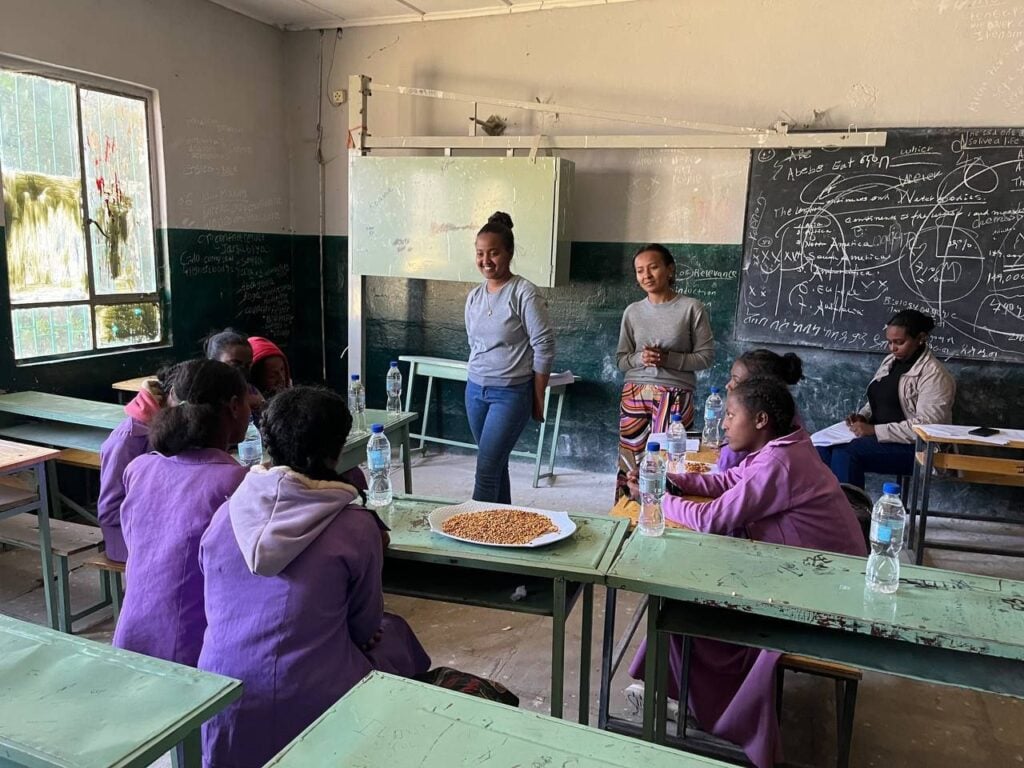
A two-day HCD sensitization introduced tools, mindsets and empathy techniques. Field research followed, using participatory interviews, focus groups and student-led activities to uncover drivers of GBV, cultural beliefs and existing protection mechanisms. During a four-day design sprint, the team developed and prototyped concepts that were refined through user feedback. Pilot preparation focused on consolidating solutions, mapping partners and shaping a sustainability model for school adoption.
Result
The team created an interactive GBV education game designed to shift attitudes, strengthen knowledge and promote respectful behaviour among students. The prototype restructures existing gender clubs into inclusive platforms delivering tailored, age-appropriate content for both boys and girls. By involving teachers, administrators and students, the intervention builds shared responsibility and lays the groundwork for safer, more supportive school environments.