Situation
Foundational research by Airbel at the International Rescue Committee in Northeast Syria and Pakistan revealed major gaps in community seed systems and farmer livelihoods under accelerating climate stress. To shift from insight to action, rapid prototyping was required to build trust in new seed varieties, strengthen storag
Assignment
The mandate was to bridge research and implementation by translating prior findings into practical prototypes. These included seed-testing experiment cycles, recognisable labelling and packaging, communication materials encouraging women’s participation, solutions to persistent storage challenges, and a scalable playbook for an inclusive Farmer Seed Network.
Approach
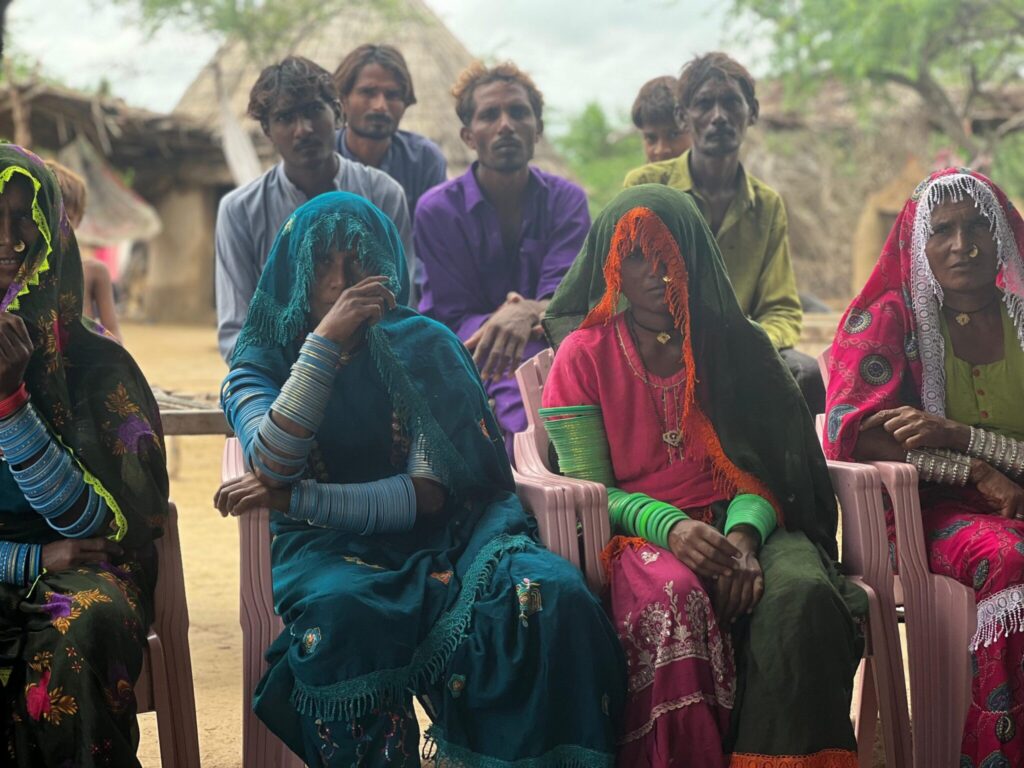
Work began with internal alignment workshops, followed by synthesis of past research. In Pakistan, stakeholder sessions across regions expanded and refined concepts. Prototypes were developed through scripts, voice-note testing, sketched labels, and scenario experiments. Field prototyping—via focus groups, individual interviews, and immersion—tested usability, trust mechanisms, and feasibility with diverse farmers, especially women. Insights were consolidated through systems mapping, personas, and journey mapping.
Result
The process generated refined behavioural insights and a Farmer Seed Network model detailing ecosystem partnerships, authentication tools, recruitment communication, seed-testing cycles, distribution flows, and farmer-journeys. A practical playbook now equips IRC teams to establish scalable, inclusive seed networks across varied agricultural contexts.